Old School Essentials: The OSR Game and Who It's For
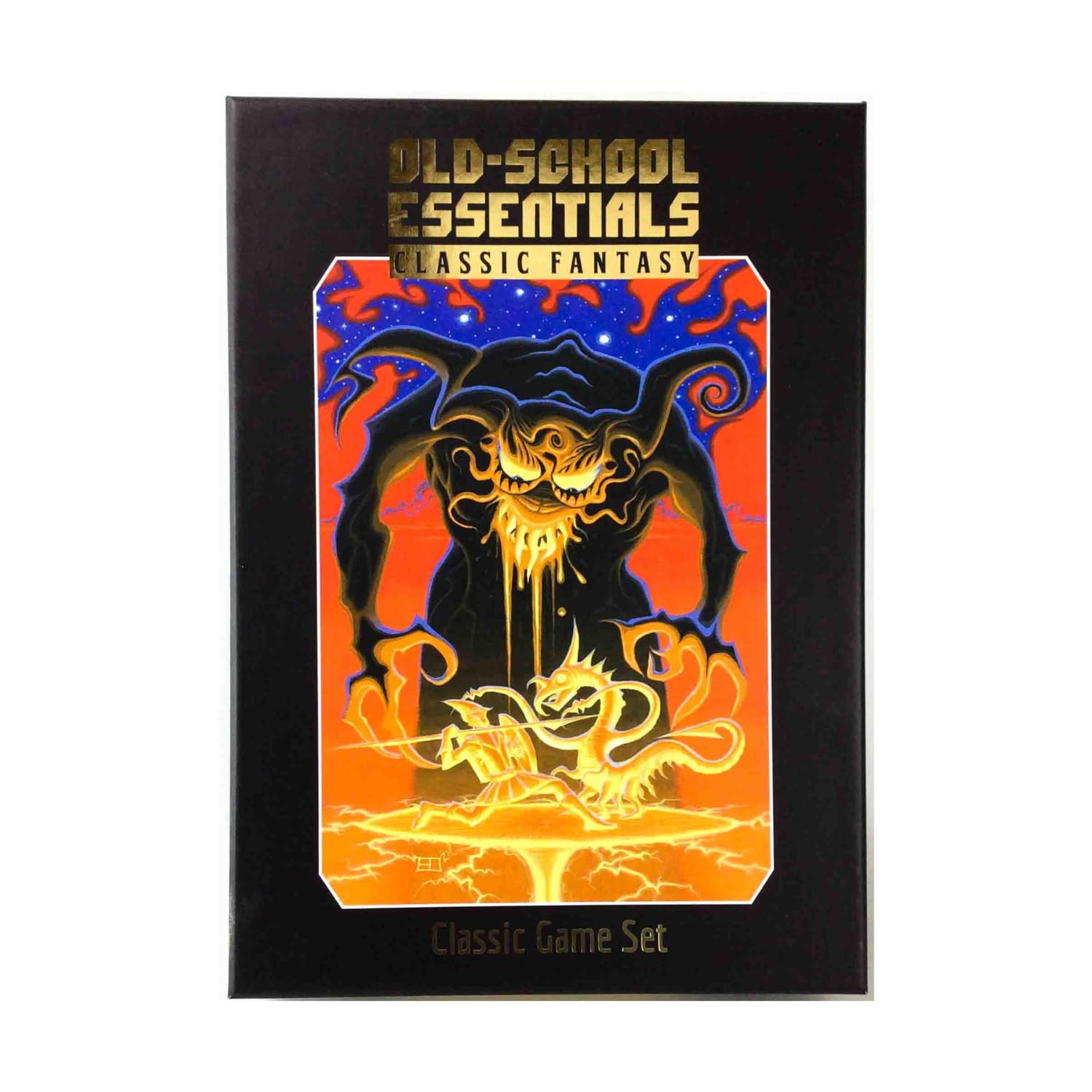
Old School Essentials (OSE) is a polished version of the 1981 Dungeons & Dragons Basic/Expert rules. It’s designed for players who want a stripped-down, lethal, and exploration-focused RPG experience. If you’ve heard of "OSR" (Old School Revival) games, this is one of the clearest modern examples.
Old School Essentials (OSE) is a polished version of the 1981 Dungeons & Dragons Basic/Expert rules. It’s designed for players who want a stripped-down, lethal, and exploration-focused RPG experience. If you’ve heard of “OSR” (Old School Revival) games, this is one of the clearest modern examples. But it’s not for everyone—especially not beginners who expect hand-holding.
At a Glance
| Best for | Experienced players who enjoy exploration and high-risk gameplay |
| Rules weight | Light |
| GM required | Yes |
| Solo play | No |
| Session length | 3–4 hours |
| Players | 3–6 |
What Playing Old School Essentials Actually Feels Like
OSE games are slow, methodical, and punishing. Players don’t roll dice to “see what happens”—they describe exactly how they check for traps, search rooms, or talk to NPCs, and the GM decides if it works. Combat is fast and deadly: a single unlucky roll can kill your character. There are no elaborate character backstories or skill trees. Your “build” is your equipment list and how cleverly you use it.
Exploration is the focus. Dungeons are puzzles. Players map corridors on graph paper, track torches and rations, and debate whether to press forward or retreat. There’s no “balance”—you might stumble into a dragon at level 1. The GM doesn’t fudge rolls to save you. If you die, you roll a new character in 5 minutes and rejoin.
The tone is gritty and impersonal. Characters are fragile, and the world doesn’t care about them. Stories emerge from survival, not scripted arcs. If you want heroic fantasy where PCs are destined for greatness, look elsewhere.
How Heavy Are the Rules?
OSE’s rules are simple but demanding. The core mechanics fit on a few pages: roll a d20 to hit, roll damage, subtract HP. There are no skill checks—players say what they do, and the GM rules on feasibility. Saving throws (vs. poison, spells, etc.) are the only “universal” rolls.
Character creation is fast but shallow. Pick a class (fighter, cleric, thief, magic-user, dwarf, elf, halfling), roll stats in order (no rearranging), and buy gear. There are no feats, no subclass options, and almost no choices after level 1. Advancement means higher numbers, not new abilities.
The real complexity is player-facing: tracking encumbrance (every item matters), light sources (torches last 60 minutes), and reaction rolls (monsters might not attack immediately). The GM needs to improvise rulings constantly—there’s no rule for “climbing a slippery wall,” just common sense.
Do You Need a Game Master?
Yes, absolutely. OSE is not a solo or GM-less game. The GM’s role is huge: they create the world, adjudicate every action, and track hidden systems like wandering monsters. There’s no “neutral” way to play—the GM sets the tone for lethality, fairness, and style.
Prep work varies. You can run published dungeons (like Tomb of the Serpent Kings), but the GM must internalize the rules and be ready to make snap judgments. There’s no “DC 15 Athletics check” fallback. If a player says, “I wedge my polearm in the door to stop it from closing,” the GM decides if that works.
New GMs will struggle. OSE assumes you already know how to arbitrate player stunts, balance encounters (hint: don’t), and manage a sandbox. If you’ve never GMed before, start with something more structured.
What to Buy First
The Old School Essentials Classic Fantasy Rules Tome is the only book you need. It includes:
- All player classes, spells, and equipment
- GM rules for dungeons, wilderness, and combat
- Monster stats and treasure tables
Avoid the “Advanced” version at first—it adds unnecessary options. If you want a starter adventure, Hole in the Oak is a classic beginner-friendly dungeon.
You’ll also need:
- Graph paper for mapping
- A dice set (d4, d6, d8, d10, d12, d20)
- Index cards for tracking gear/HP
Is Old School Essentials Good for Beginners?
Yes if…
- You want a game where creativity beats rules knowledge
- You’re okay with frequent character death
- You prefer exploration over storytelling
No if…
- You want balanced combat or heroic fantasy
- You need character customization
- You dislike tracking gear/light/time
OSE is brutal for true beginners. There’s no tutorial, no safety net, and no guidance for GMs. Players must be proactive—if you wait for the GM to prompt you, you’ll die. Try D&D or Shadowdark first if you’re new to RPGs.
Old School Essentials vs D&D
D&D is about superheroic PCs, balanced encounters, and cinematic stories. OSE is about resource management, unfair challenges, and emergent gameplay.
Key differences:
- Characters: 5E PCs have tons of abilities; OSE PCs have almost none.
- Combat: 5E fights are long and tactical; OSE fights are over in 2 rounds.
- Rules: 5E has rules for everything; OSE expects rulings.
OSE is closer to a board game—clear win/lose conditions, no plot armor.
Best Adventures for Old School Essentials
Stick to OSR modules—avoid 5E adventures. Recommended starters:
- Tomb of the Serpent Kings: A teaching dungeon that explains traps and pacing.
- Hole in the Oak: Weird, whimsical, and easy to run.
- Winter’s Daughter: A short, story-driven dungeon with puzzles.
For GMs, The Principia Apocrypha (free online) explains OSR philosophy. Avoid megadungeons like Stonehell until you’re comfortable.
Frequently Asked Questions
Q: Can I play Old School Essentials solo?
No, OSE requires a Game Master to adjudicate actions and manage the world.
Q: Is Old School Essentials compatible with other OSR games?
Yes, OSE is compatible with most OSR systems and modules, as it’s based on the same Basic/Expert rules.
Q: How long does a typical OSE campaign last?
Campaigns can vary, but OSE games often focus on shorter, episodic play rather than long-term story arcs.