Heart: The City Beneath
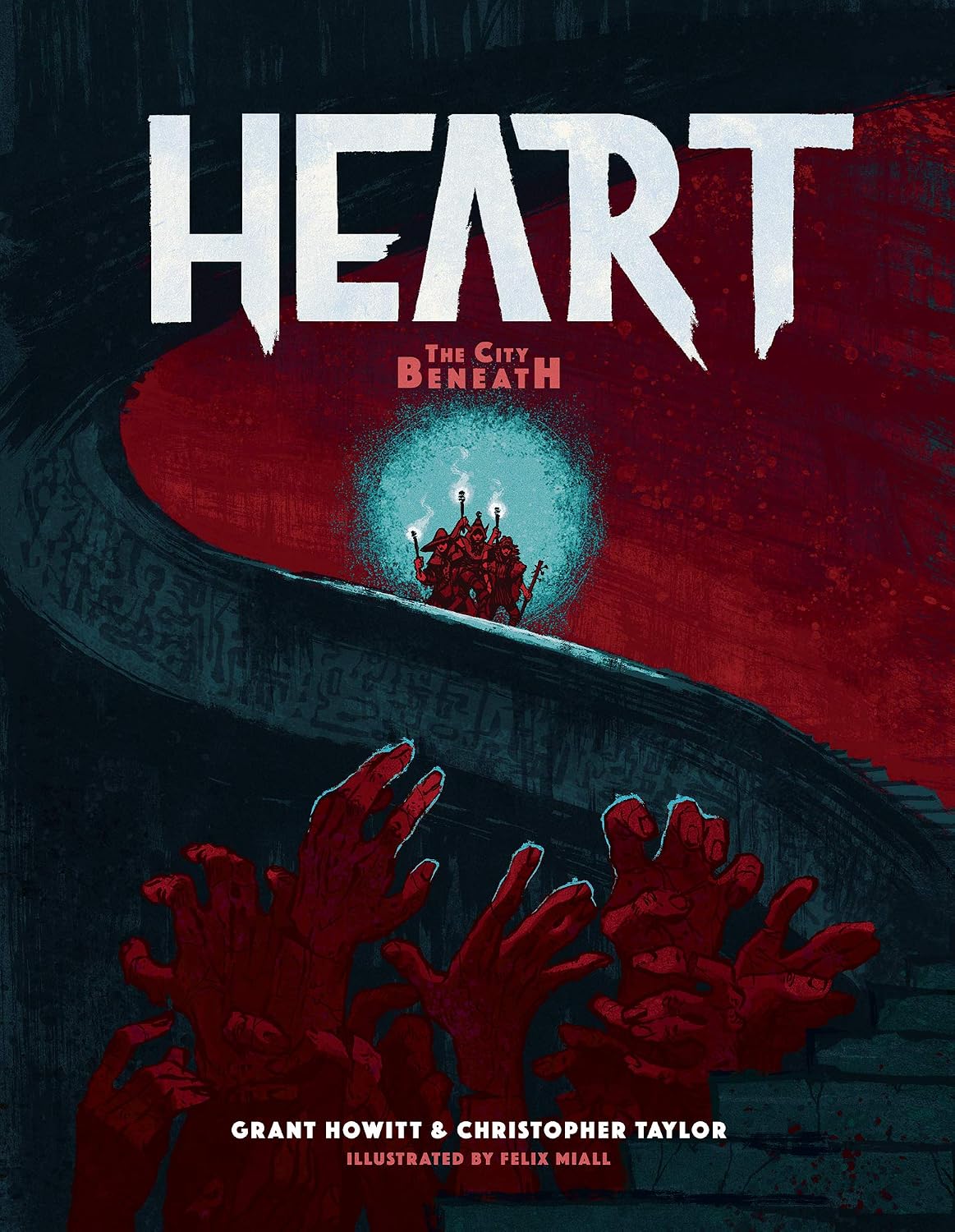
Heart: The City Beneath is a tabletop RPG about doomed delvers descending into a living, breathing dungeon that wants to break them. It's a game of dark fantasy horror where characters pursue obsessions at great personal cost — and where the dungeon itself shifts and warps around them.
Heart: The City Beneath is a tabletop RPG about doomed delvers descending into a living, breathing dungeon that wants to break them. It’s a game of dark fantasy horror where characters pursue obsessions at great personal cost — and where the dungeon itself shifts and warps around them. This guide explains what Heart is, who it’s for, and whether it’s a good choice for your group.
What Is Heart: The City Beneath?
Heart is set beneath the city of Spire, in a vast, ever-changing labyrinth that exists somewhere between a physical place and a psychological one. The dungeon — called the Heart — is sentient in some undefined way. It responds to what the characters want, fear, and obsess over. The deeper you go, the stranger and more dangerous it becomes.
Characters in Heart are called delvers. Each delver has an obsession — something they want badly enough to risk their sanity and their life descending into the Heart. Maybe they’re looking for a lost loved one. Maybe they want to find a treasure that doesn’t exist anywhere else. Maybe they just can’t stop. Whatever it is, it drives them forward even when every instinct says to turn back.
The game is designed around stress and fallout. Characters accumulate stress from failed rolls, dangerous situations, and the toll of surviving in the Heart. When stress gets too high, bad things happen — injuries, psychological breaks, strange transformations, or death. Fallout is rarely clean or final. Characters can be changed, haunted, or permanently marked by what happened to them without dying outright.
What Playing Heart Actually Feels Like
Heart plays like a dark fairy tale told through a dungeon. Sessions tend to be tense and atmospheric rather than tactical. You’re not clearing rooms and counting loot — you’re pushing deeper into something that doesn’t want to be understood, watching your character change in ways you didn’t predict.
The GM — called the Custodian — doesn’t plan encounters in the traditional sense. Instead, they build situations using a set of tools that generate pressure and weirdness rather than fixed scenarios. The Heart changes. Things you saw last session may not be there the next time. The dungeon isn’t a place you map and conquer; it’s a place that maps you.
Combat exists but isn’t the focus. Many dangerous situations are resolved through skill, retreat, or negotiation. When combat does happen, it’s fast and brutal, and the stress it generates can be as dangerous as the damage.
Is Heart Good for Beginners?
Heart is not the easiest first game. The mechanics are streamlined, but the tone and style require everyone at the table to buy into a specific kind of play — strange, dangerous, character-focused, and willing to let bad things happen without a rescue. If your group is coming from D&D expecting tactical combat and heroic arcs, Heart will feel disorienting.
That said, Heart is not mechanically complex. The rules are lighter than D&D, and the core loop — roll dice, take stress, push forward or retreat — is easy to grasp. The difficulty is tonal, not mechanical.
Heart works best for groups who want something with genuine stakes, a willingness to have characters fail and change dramatically, and an interest in a dungeon that feels alive and strange rather than a puzzle to be solved.
Heart vs. Blades in the Dark
Heart and Blades in the Dark were developed in the same design community and share some overlapping ideas around stress and character-driven consequences. However, they play very differently.
Blades in the Dark is about a crew of scoundrels pulling heists in a city. It’s strategic and social. Characters grow, acquire resources, and build toward something. Heart is about individuals descending into a place that will probably kill them, driven by personal obsession. It’s more intimate and more fatal.
If you’ve played Blades and want a darker, more personal experience, Heart is a natural next step. If you’re new to both, Blades is the easier on-ramp.
What to Buy
The Heart core rulebook contains everything you need to play. It includes the rules, a guide to the dungeon, character options for five delver classes, and tools for the Custodian to build sessions. The book is dense with atmosphere — even the layout and art contribute to the feeling of something ancient and wrong.
The Spire core rulebook (the companion game set in the city above the Heart) is worth picking up eventually if your group wants to explore the broader setting.
Who Is Heart For?
Heart is for groups who want horror that comes from character vulnerability rather than jump scares. It’s for players who enjoy watching their characters change and suffer and still push forward. It’s not for groups who want to win cleanly or build toward triumph.
If you’ve read the description and thought “that sounds amazing” — Heart is probably for you. If you thought “that sounds exhausting” — start somewhere else.