Call of Cthulhu: What It Is and Who It's For
Call of Cthulhu is a horror tabletop RPG where players investigate supernatural mysteries, often facing cosmic horrors that defy human understanding. Unlike fantasy games like D&D, it emphasizes storytelling, investigation, and survival over combat or heroic action.
Call of Cthulhu is a horror tabletop RPG where players investigate supernatural mysteries, often facing cosmic horrors that defy human understanding. Unlike fantasy games like D&D, it emphasizes storytelling, investigation, and survival over combat or heroic action. If you enjoy slow-burn tension, solving puzzles, and the idea of losing your sanity as you uncover forbidden knowledge, this might be for you.
At a Glance
| Best for | Horror fans who enjoy slow-burn mysteries and psychological tension |
| Rules weight | Medium |
| GM required | Yes |
| Solo play | No |
| Session length | 3–4 hours |
| Players | 3–6 |
What Playing Call of Cthulhu Actually Feels Like
Playing Call of Cthulhu is like stepping into a horror movie where you’re the protagonist—but not the invincible hero. Most sessions revolve around gathering clues, interviewing suspects, and piecing together a mystery while avoiding (or stumbling into) terrifying supernatural events. Combat is rare and often deadly; running or hiding is usually smarter than fighting.
A typical session might involve your character—a journalist, detective, or academic—tracking down a missing person, only to discover they were sacrificed in a cult ritual. You’ll spend time searching libraries for obscure books, sneaking into abandoned buildings, or decoding cryptic notes. When you finally confront the horror, it’s often a losing battle. The game thrives on atmosphere, with the Game Master (called the “Keeper”) describing eerie sounds, unsettling visions, and the slow erosion of your character’s sanity.
Unlike games where players expect to “win,” Call of Cthulhu is about the experience of uncovering horrors at great personal cost. Characters frequently die, go insane, or retire traumatized. If you’re okay with that—and enjoy collaborative storytelling where failure can be as memorable as success—this game delivers a unique kind of tension.
How Heavy Are the Rules?
Call of Cthulhu’s rules are simpler than games like D&D, but they’re not effortless. The core mechanic is the “percentile system”: your skills are rated 1–100, and you roll a d100 to see if you succeed. For example, if your “Library Use” skill is 60, you roll under 60 to find a clue in a book. This is easy to grasp, but there are nuances.
Character creation involves allocating points to skills, which can feel overwhelming at first. There are over 30 skills, and beginners might not know how to prioritize them (e.g., is “Spot Hidden” more useful than “History”?). The Keeper will need to guide new players here. Combat rules are less complex than D&D, but they’re deadly—a single gunshot can kill a character, so fights are over quickly.
The biggest hurdle for beginners is the “Sanity” system. Tracking sanity loss, temporary insanity, and phobias adds another layer of bookkeeping. Keepers also need to manage clues, NPCs, and horror reveals smoothly, which requires preparation. Overall, the rules are manageable, but the game demands more storytelling finesse than mechanical mastery.
Do You Need a Game Master?
Yes, Call of Cthulhu requires a Game Master (called the Keeper). Unlike board games or solo RPGs, the Keeper is essential. They prepare the mystery, play all the NPCs, describe the horrors, and decide how clues are revealed. Without one, the game doesn’t work.
Being a Keeper is harder than being a player. You’ll need to read the adventure beforehand, improvise when players go off-script, and balance pacing so the horror feels tense but not unfair. For beginners, this can be intimidating. However, the game provides tools to help: pre-written adventures (called “scenarios”) often include detailed clues, NPC motivations, and tips for running scenes.
If no one in your group wants to be Keeper, Call of Cthulhu isn’t a good fit. But if someone is willing to try, the role is rewarding—you get to craft a chilling story and watch players unravel it. Just know it’s more work than being a player.
What to Buy First
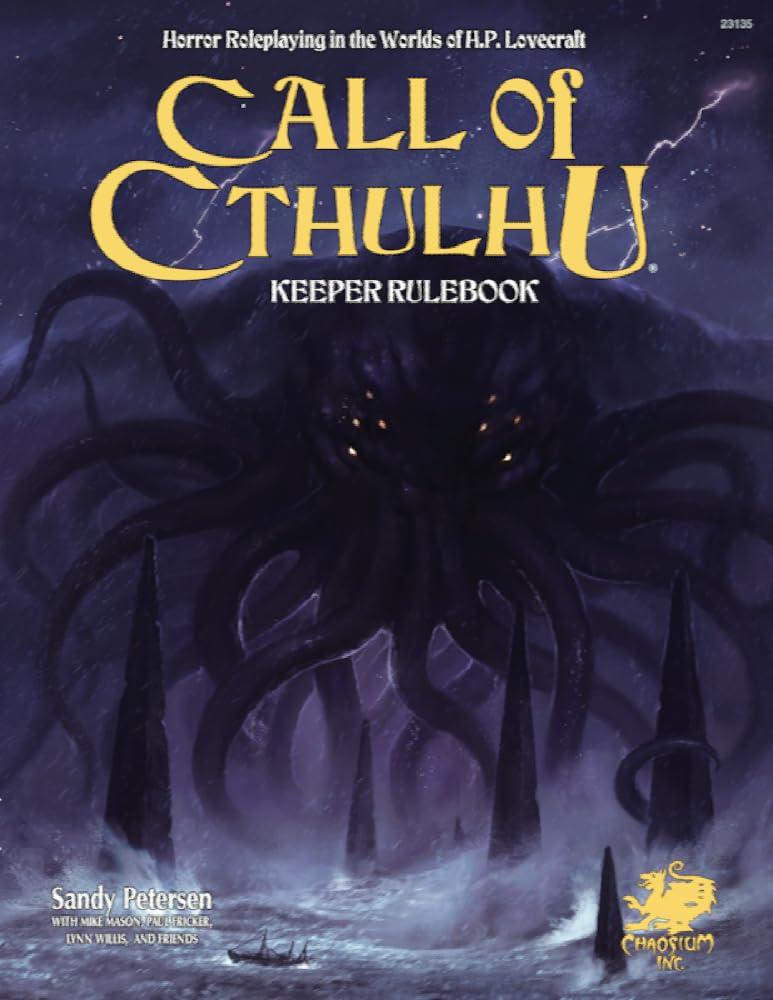
The only book you need to start is the Call of Cthulhu 7th Edition Keeper Rulebook. It contains all the rules, a guide for Keepers, and a starter adventure (“The Haunting”). Don’t buy the Investigator Handbook yet—it’s optional, adding extra character-creation options but no critical rules.
If you want a simpler entry point, the Call of Cthulhu Starter Set is cheaper and includes condensed rules, pre-made characters, and three beginner-friendly adventures. It’s a great way to test the game before committing to the full rulebook.
Avoid splurging on supplements like “Masks of Nyarlathotep” (a famous but massive campaign) until you’ve played a few one-shot scenarios. Focus on learning the basics first.
Is Call of Cthulhu Good for Beginners?
Call of Cthulhu can work for beginners, but it’s not the easiest starting point. The rules are simpler than D&D, but the tone, lethality, and need for a skilled Keeper make it trickier to run smoothly. New players might struggle with the open-ended nature of investigations (“What do we do next?”) or feel frustrated when their characters die or go insane.
Yes if…
- You love horror and mystery more than combat or power fantasies.
- Your group enjoys roleplaying and collaborative storytelling.
- Someone is willing to put in the work to be the Keeper.
No if…
- You want a game where characters grow stronger over time (progress here is often “surviving longer”).
- Your group prefers clear objectives or lots of action.
- No one wants to prepare or run the game (being a player is easier, but you still need a Keeper).
For beginners, the best approach is to try a one-shot scenario (like “The Haunting”) to see if the tone and gameplay click.
Call of Cthulhu vs D&D — A Very Different Game
Call of Cthulhu and D&D are both RPGs, but they aim for completely different experiences:
- Characters: In D&D, you play heroes who grow stronger, gaining spells and abilities. In Call of Cthulhu, your character might start as a librarian or a beat cop, and they’ll likely die or go insane before improving much.
- Combat: D&D focuses on tactical fights with grids and initiative. Call of Cthulhu combat is fast, deadly, and often avoidable—charging at a monster usually ends badly.
- Story Structure: D&D adventures are often quests with clear goals (rescue the prince, kill the dragon). Call of Cthulhu scenarios are mysteries where the goal is to uncover the truth—even if you can’t stop it.
- Tone: D&D is high fantasy; Call of Cthulhu is bleak, psychological horror.
If your group enjoys D&D’s power progression and heroic action, Call of Cthulhu might feel jarring. But if you want a slower, more immersive horror experience, it’s a refreshing change.
Best Adventures for Call of Cthulhu
For beginners, start with these short, well-structured scenarios:
- The Haunting (included in the Keeper Rulebook): A classic haunted house investigation with a clear mystery and a terrifying finale. Ideal for first-time Keepers and players.
- Edge of Darkness (in the Starter Set): A ritual-gone-wrong story with a manageable scope and good pacing.
- The Lightless Beacon (free on Chaosium’s website): A short, action-heavy scenario where players are trapped in a lighthouse with monsters. Good for groups that want faster pacing.
Once you’re comfortable, try longer campaigns like Masks of Nyarlathotep (a globe-trotting epic) or Horror on the Orient Express (a murder mystery on a train). These require more commitment but are considered masterpieces of horror RPGs.
Avoid overly complex or punishing scenarios (like “Beyond the Mountains of Madness”) until your group has experience. The key is to start small and lean into the atmosphere—Call of Cthulhu shines when players feel the dread building slowly.
Frequently Asked Questions
Q: Can you play Call of Cthulhu without a Keeper?
A: No, the Keeper is essential for running the game, managing NPCs, and revealing clues. Without one, the game doesn’t function.
Q: Is Call of Cthulhu good for long-term campaigns?
A: Yes, but character survival is rare