Blades in the Dark: What It Is and Who It's For
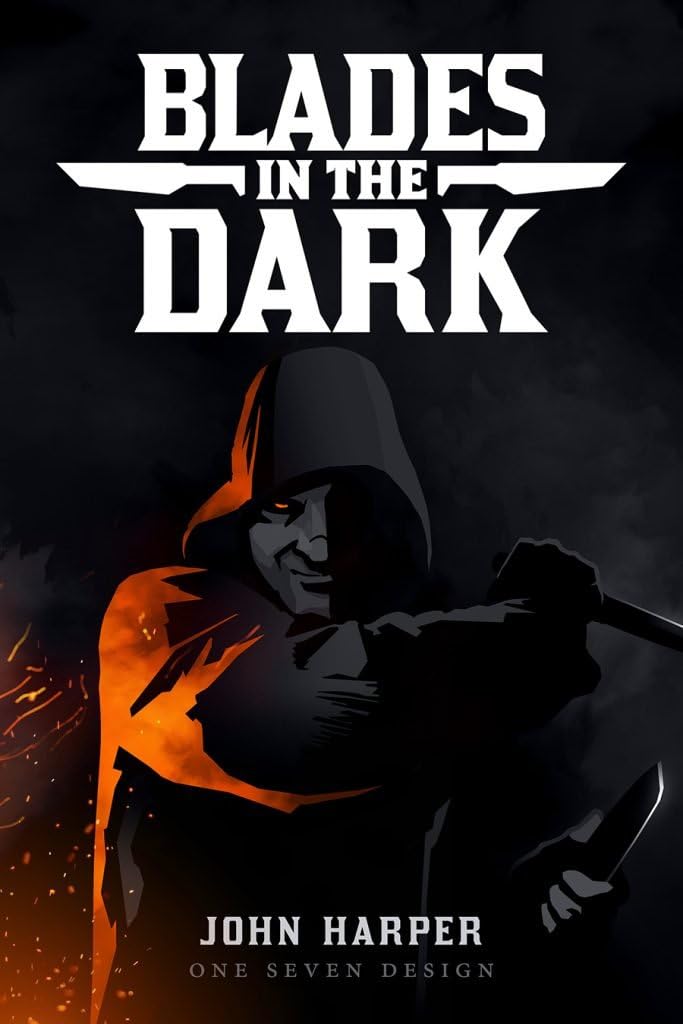
Blades in the Dark is a tabletop RPG about playing a crew of daring scoundrels in a haunted industrial city. You plan heists, navigate factions, and deal with supernatural dangers—but the game focuses on fast-paced action over meticulous planning.
Blades in the Dark is a tabletop RPG about playing a crew of daring scoundrels in a haunted industrial city. You plan heists, navigate factions, and deal with supernatural dangers—but the game focuses on fast-paced action over meticulous planning. If you like the idea of criminal underworld stories with a gothic twist, this might be for you.
At a Glance
| Best for | Groups who enjoy improv-heavy heist stories |
| Rules weight | Medium |
| GM required | Yes |
| Solo play | No |
| Session length | 2–3 hours |
| Players | 3–5 (including GM) |
What Playing Blades in the Dark Actually Feels Like
Blades in the Dark is chaotic, improvisational, and cinematic. Unlike games where you spend hours planning a heist, Blades jumps straight to the action. The GM (called the “game master” here too) sets up a score (a job, like stealing a relic or assassinating a rival), and the crew dives in. When things go wrong—which they will—you rely on flashbacks to explain how you prepared for this exact disaster.
For example: Your crew is cornered by guards during a break-in. Instead of backtracking, a player might say, “Actually, I bribed one of these guards last week—here’s why he’s on our side.” The game encourages this kind of quick thinking. Rolls are simple (you’ll usually roll a pool of d6s based on your character’s skill), but consequences are messy. Succeeding might still mean taking damage, attracting unwanted attention, or leaving evidence behind.
The tone is dark but often absurd. One moment you’re negotiating with a demon-possessed crime lord, the next you’re arguing over who forgot to bring the rope. The game’s setting, Duskvol, is a mix of Victorian London and supernatural horror—think Peaky Blinders meets Dishonored. If your group enjoys rolling with punches and leaning into chaos, Blades shines.
How Heavy Are the Rules?
Blades is rules-light compared to games like D&D, but it’s not structureless. The core mechanic is simple: roll a handful of d6s, and the highest single die determines the outcome (1–3: failure, 4–5: partial success, 6: full success). But layered on top are systems for stress, trauma, faction reputations, and crew advancement.
For beginners, the hardest part isn’t the rules themselves—it’s the mindset shift. Blades doesn’t care about inventory tracking or precise movement. Instead, you’ll track “stress” (a resource you spend to push your luck or resist consequences) and “heat” (how much the law or rivals are after you). These abstract systems can feel weird if you’re used to D&D’s concrete hit points and spell slots.
The rulebook is well-organized, but it assumes you’ll make rulings on the fly. For example, the GM sets “position” (how risky an action is) and “effect” (how impactful it’ll be) based on context. This takes practice. New GMs might struggle with consistency until they get a feel for the game’s rhythm.
Do You Need a Game Master?
Yes, Blades requires a GM. Unlike GM-less games (e.g., Fiasco), the GM here plays a critical role: they portray the world, set up scores, and decide how factions react to the crew’s actions. That said, the GM isn’t a adversary—they’re encouraged to be a fan of the players, rooting for them even as they throw obstacles in their way.
New GMs should know: Blades gives you tools to improvise. The book includes tables for generating jobs, rivals, and complications, so you don’t need to prep elaborate plots. But you do need to think on your feet. Players will take unexpected approaches, and the flashback system means they can retroactively change the situation. If you’re uncomfortable making rulings without precedent, this might feel daunting.
For players, the GM’s style matters a lot. A good Blades GM keeps the pressure high but lets the crew’s actions drive the story. If your GM prefers rigid plots or punishes creativity, the game will fall flat.
What to Buy First
All you need is the Blades in the Dark core rulebook. It includes:
- Complete rules for players and GMs
- A guide to Duskvol (the setting)
- Pre-made crews and characters
- GM tools for generating scores and adversaries
There are supplements (like Blades Against Darkness for dungeon crawling), but the core book is enough for months of play. The physical book is well-designed, with clear layouts and evocative art. If you’re unsure, check out the free SRD (System Reference Document) online to preview the rules.
Is Blades in the Dark Good for Beginners?
Yes if…
- Your group enjoys improv and storytelling over strict rules.
- You’re okay with failure driving the story forward.
- You want a game where sessions feel like episodes of a heist show.
No if…
- You prefer clear-cut rules for every situation.
- Your group dislikes morally gray characters or dark settings.
- You want a game where careful planning always pays off.
For beginners, Blades is easier to play than D&D but harder to GM. Players only need to grasp their character’s abilities and the core dice mechanic. GMs, though, need to juggle factions, clocks (progress trackers for looming threats), and consequences on the fly. If your group is new to RPGs but has an experienced GM, Blades can work well. If everyone’s new, expect a learning curve.
Blades in the Dark vs D&D
- Pacing: D&D focuses on tactical combat; Blades focuses on heists and faction drama. A D&D fight might take an hour; a Blades score usually wraps up in one session.
- Character Death: In D&D, death is rare until high levels. In Blades, characters can die or retire from trauma quickly—but making a new one takes minutes.
- Prep: D&D often requires pre-made maps and stat blocks. Blades runs with minimal prep—the GM might just jot down a few factions and a score idea.
- Player Agency: D&D rewards planning. Blades rewards improvisation (“Oh no, we’re caught? Actually, I planned for this…”).
Blades isn’t “better” or “worse”—it’s for different tastes. If D&D feels too slow or combat-heavy, Blades might be a breath of fresh air.
Best Scenarios for Blades in the Dark
Blades excels when:
- You want episodic play. Each session can be a self-contained score, perfect for irregular schedules.
- Your group loves drama. Betrayals, desperate deals, and last-minute escapes are baked into the system.
- You enjoy world-building together. The game asks players to contribute details about the setting (e.g., “Who’s your character’s old nemesis?”).
It struggles when:
- You want heroic fantasy. Blades characters are scoundrels, not knights.
- You dislike improvisation. If your group wants everything pre-planned, the flashback system will feel jarring.
- You crave tactical combat. Fights in Blades are quick and abstract, not grid-based.
For the right group, Blades is one of the most dynamic RPGs out there. But it’s not for everyone—and that’s okay.
Frequently Asked Questions
Q: Can you play Blades in the Dark with just 2 players?
Yes, though it works best with 3–5. With 2 players (1 GM + 1 player), the GM may need to adjust difficulty or provide NPC allies to help during scores.
Q: How lethal is Blades in the Dark compared to other RPGs?
Characters can accumulate trauma and retire, but outright death is less common than in some systems. The game focuses more on consequences than permadeath.
Q: Is the flashback mechanic confusing for new players?
Most players grasp it quickly—it’s designed to skip planning phases. The GM sets limits (e.g., stress cost or plausibility) to keep it balanced.