Eberron: D&D's Pulp Fantasy Setting
Eberron is Dungeons & Dragons' take on pulp adventure and noir intrigue, where magic-powered trains cross continents and ancient secrets lurk in every shadow. Unlike traditional medieval fantasy, it blends swashbuckling action, detective stories, and political intrigue with a unique magic-as-technology twist.
Eberron is Dungeons & Dragons’ take on pulp adventure and noir intrigue, where magic-powered trains cross continents and ancient secrets lurk in every shadow. Unlike traditional medieval fantasy, it blends swashbuckling action, detective stories, and political intrigue with a unique magic-as-technology twist. If you want high-stakes heists, war-torn nations, and morally gray choices, this is your setting.
What Makes Eberron Different From Standard D&D
Eberron turns classic D&D tropes upside down. Instead of dungeon crawls in forgotten ruins, you might investigate a murder on a flying airship or negotiate with a dragonmarked crime syndicate. Magic isn’t rare—it’s industrialized. Streetlights are powered by ever-burning lanterns, and healing potions are mass-produced. This changes how players interact with the world: a simple “detect magic” spell won’t solve every mystery when magic is everywhere.
The setting also leans hard into noir and pulp influences. Think Indiana Jones meets Casablanca, with a dash of steampunk. The world is recovering from a century-long war, leaving nations fractured and desperate. Players often work as mercenaries, spies, or private eyes, not just heroic adventurers. For example, a typical quest might involve tracking down a stolen artifact for a shady patron, only to discover it’s tied to a deeper conspiracy.
Another key difference: Eberron deliberately avoids clear-cut good vs. evil conflicts. The Church of the Silver Flame hunts demons but is also fanatical and oppressive. The warforged (sentient constructs) are free but face discrimination. Even the “bad guy” nations, like Karrnath, have sympathetic motives. This makes for richer roleplaying but requires players comfortable with moral ambiguity.
What to Buy First
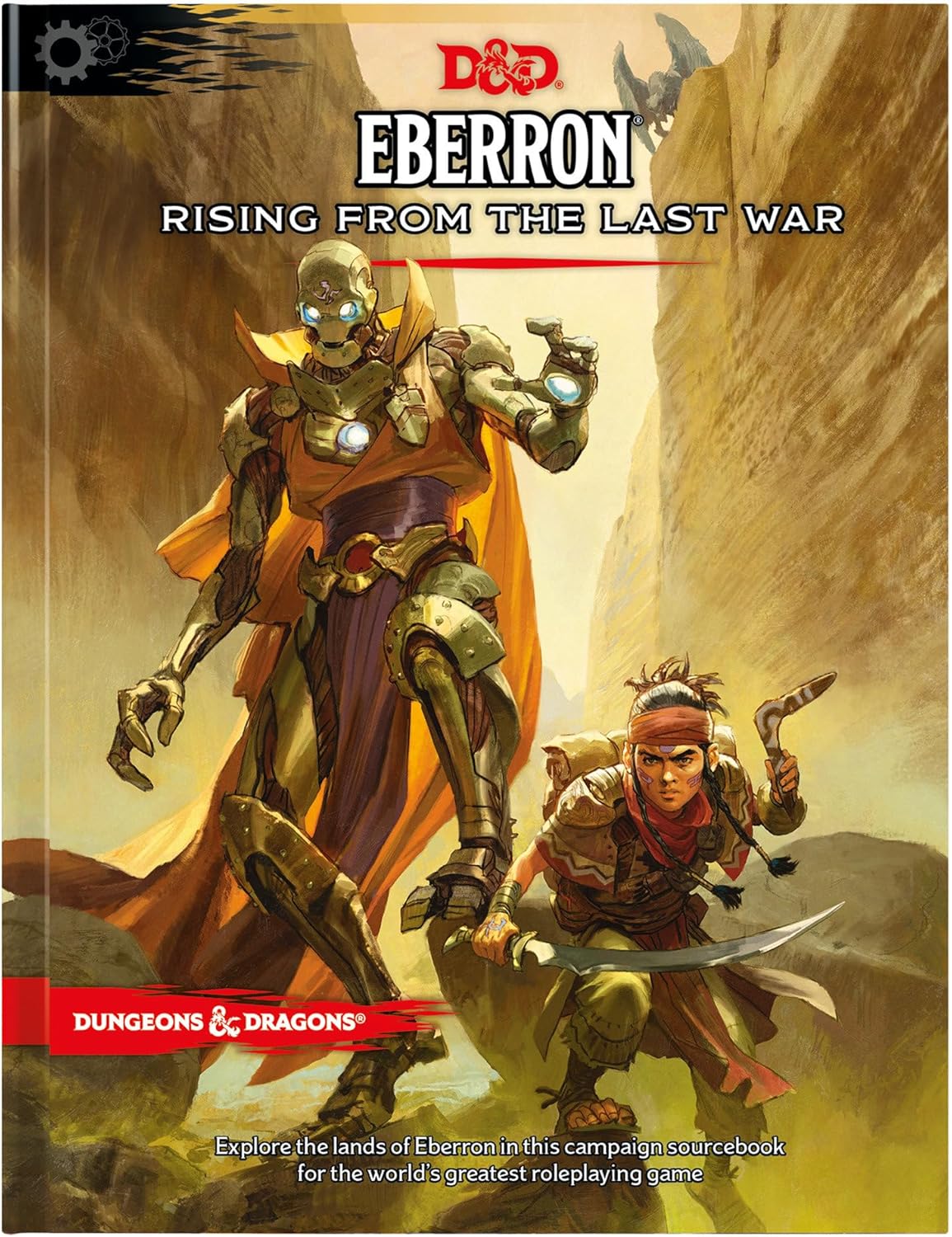
Eberron: Rising from the Last War
The essential starting point is Eberron: Rising from the Last War. This book provides everything you need: lore, new races (like warforged and changelings), subclass options, and a starter adventure. It focuses on the continent of Khorvaire, the heart of Eberron’s intrigue, with detailed city guides for locations like Sharn (a vertical metropolis of towers and airships).
What sets this book apart is its practicality. It includes tables for generating pulp-style adventures on the fly, like “A noble hires you to recover a relic from a rival house—but the relic is cursed.” The art and maps are vibrant, helping newcomers visualize the world’s unique blend of magic and technology. If you only buy one Eberron book, make it this one.
Adventures Set in Eberron
For beginners, The Oracle of War (a D&D Adventurers League series) offers a structured, episodic campaign. It’s designed for drop-in play, making it forgiving for new DMs. Each session is a self-contained mission—recovering a stolen airship, infiltrating a gambling den—while tying into a larger story.
Is Eberron Good for Beginners?
Eberron’s complexity can be daunting. The lore is dense, with dozens of factions, nations, and historical events. New players might struggle to keep track of the Dragonmarked Houses (powerful magical trade organizations), the Last War’s aftermath, or the difference between groups like the Aurum and the Boromar Clan. The DM will need to do extra homework to make the world feel cohesive.
That said, the setting’s structure—urban intrigue, episodic adventures, and clear factions—can actually help beginners. Unlike open-world sandboxes, Eberron often gives players clear hooks: “You work for a newspaper investigating corruption” or “You’re hired to protect a train from bandits.” This focus can ease new players into roleplaying without overwhelming them.
The real hurdle is tone. Eberron works best when players embrace its pulp and noir roots. If your group expects straightforward heroism, they might clash with the setting’s gray morality. But if they’re excited by heists, political maneuvering, and cinematic action, Eberron can be a thrilling introduction to D&D.
Eberron vs. Forgotten Realms — When to Choose Eberron
The Forgotten Realms is D&D’s default setting: classic fantasy with elves in forests, dwarves in mountains, and evil wizards in towers. It’s straightforward and familiar, which makes it great for beginners who want traditional adventures. Eberron, by contrast, is for groups who want something fresher and more dynamic.
Choose Eberron if:
- You love heists, mysteries, or political drama. The setting’s factions (like the espionage-heavy House Phiarlan) create endless intrigue.
- You want magic to feel like part of everyday life, not just a tool for adventurers. Riding a lightning rail or visiting a floating district makes the world feel alive.
- Your group enjoys moral complexity. Eberron’s conflicts rarely have perfect solutions, forcing players to make tough calls.
Avoid Eberron if:
- You prefer simple, good-vs-evil stories. Eberron’s shades of gray require buy-in from players.
- Your table dislikes lore-heavy settings. Forgotten Realms is easier to improvise; Eberron demands more prep to get the tone right.
- You’re running a pre-written adventure not designed for Eberron. Converting modules can be tricky due to the setting’s unique magic and technology.
In short, Eberron isn’t just “D&D with trains”—it’s a fundamentally different approach to storytelling. But for the right group, it’s one of the most rewarding settings out there.
Frequently Asked Questions
Q: Can I use standard D&D races in Eberron?
Yes, but they often have unique cultural twists. For example, orcs in Eberron are spiritual druidic guardians, not just savage warriors, and halflings ride dinosaurs in the Talenta Plains.
Q: How do I run a noir-style mystery in Eberron?
Focus on moral ambiguity, red herrings, and faction politics. Start small—a missing person case that reveals ties to a Dragonmarked House—and use Sharn’s layered city districts for atmospheric locations like smoky jazz clubs or corrupt watch stations.
Q: Is Eberron compatible with other D&D settings?
Technically yes, but Eberron’s isolated cosmology and magic-as-technology make crossovers tricky. If you want to blend settings, plan how elements like the Mournland or dragonmarks would interact with other worlds.