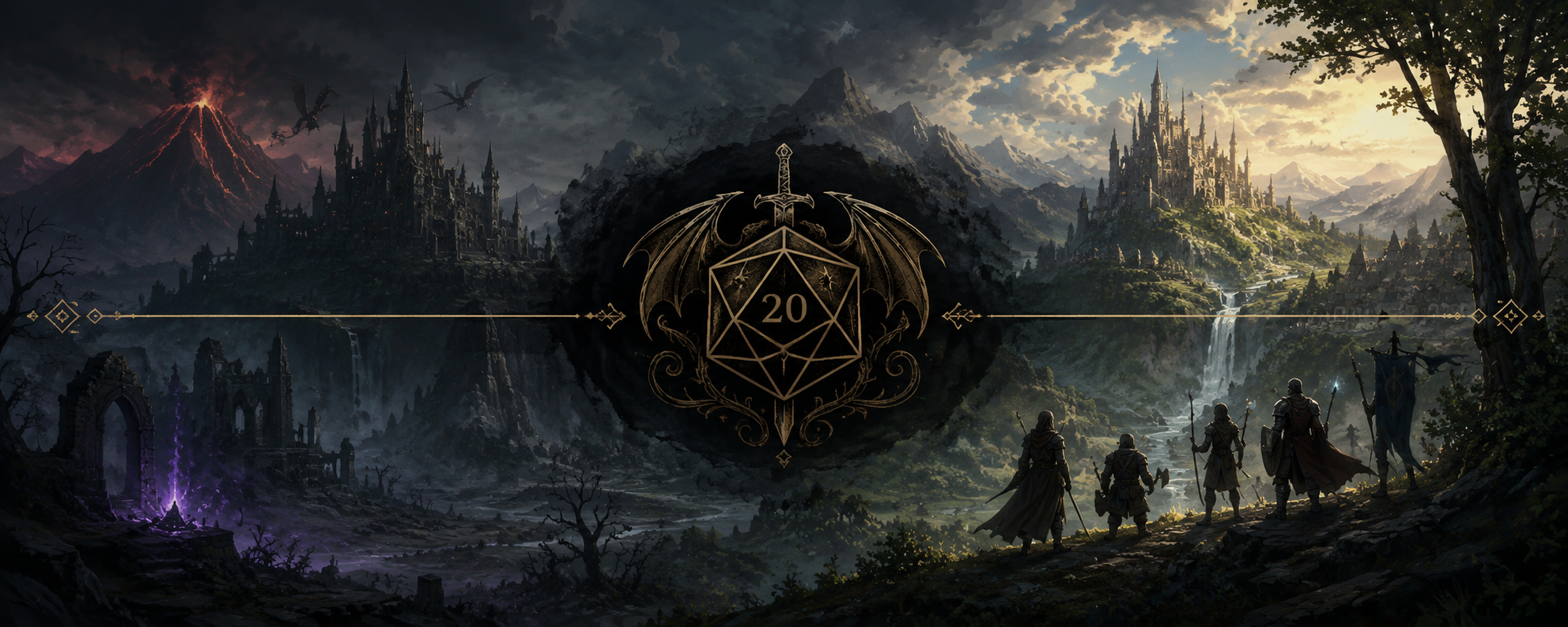
Old School vs New School: What's the Difference?
Quick Answer: Beginners should know that old school games focus on deadly challenges and player creativity, while new school games like D&D 5e prioritize storytelling and balanced encounters. Try both styles to see which fits your group’s playstyle—neither is objectively better.
Tabletop RPGs have evolved over decades, splitting into two broad styles: “old school” (1970s–1990s) and “new school” (2000s–present). Old school games focus on player ingenuity, deadly challenges, and minimal rules. New school games emphasize balanced combat, character storytelling, and accessibility. Neither is objectively better—your preference depends on what you want from the game.
What “Era” Means in TTRPG Design
“Old school” and “new school” aren’t just about release dates—they reflect fundamental design philosophies. Old school games (like early Dungeons & Dragons or Traveller) assume players will solve problems creatively, often bypassing rules entirely. The referee (GM) makes rulings on the fly, and characters die frequently. There’s little guidance for storytelling or balanced encounters—the world exists independently of the players, and fairness isn’t guaranteed.
New school games (like D&D or Blades in the Dark) are built with player expectations in mind. Rules cover social interactions, character arcs, and balanced combat. The GM is encouraged to adjust difficulty to keep the story moving. Character death is rare unless the group agrees it’s dramatic. These games often include mechanics for collaborative worldbuilding, like Fate’s “aspects” or Apocalypse World’s “fronts.”
The divide isn’t absolute—plenty of games mix elements. For example, Mörk Borg has old-school lethality but modern minimalist design. However, understanding these two approaches helps you pick games that match your group’s preferences.
Old School Renaissance (OSR) — What It Is and Who It’s For
The OSR (Old School Renaissance) is a movement reviving early TTRPG design principles. Games like Old-School Essentials or Dungeon Crawl Classics strip away modern complexity, focusing on dungeon crawls, exploration, and player skill over character stats. Combat is fast and deadly—a single unlucky roll can kill your character. There are no “balanced encounters,” so players must think tactically, negotiate, or flee.
OSR games often use “rulings, not rules.” For example, instead of a detailed grappling system, the GM decides what happens based on the situation. This requires trust in the GM but allows for creative solutions. OSR adventures are typically location-based (like a dungeon or hex map) rather than story-driven. The GM prepares the environment, not a plot, and players drive the action through their choices.
These games appeal to players who enjoy:
- Challenge: Progress is earned through clever play, not leveling up.
- Emergent stories: The tale comes from surviving disasters, not scripted arcs.
- DIY creativity: House rules and improvisation are expected.
If you dislike high lethality or prefer structured narratives, OSR might frustrate you. But if you want a game where every decision matters, it’s worth trying.
The Modern Era — D&D and the Indie Wave
Modern TTRPGs prioritize accessibility and narrative. D&D is the most famous example—streamlined rules, balanced combat, and built-in safety nets (like death saves). Characters are hard to kill unless the GM forces it, and abilities often guarantee success (e.g., a rogue’s “Reliable Talent” prevents low rolls). The game assumes heroes will win eventually, with the GM adjusting challenges to fit.
Indie games take this further. Powered by the Apocalypse games (Monster of the Week, Masks) replace complex rules with narrative triggers. For example, instead of tracking ammunition, a failed roll might mean “you’re out of bullets—what do you do?” Games like Fiasco or Wanderhome remove GMs entirely, focusing on collaborative storytelling with minimal mechanics.
Modern design appeals to players who want:
- Character depth: Mechanics for backstories, relationships, and growth.
- Predictable pacing: Few “gotcha” moments; failure is dramatic, not punitive.
- Low prep: Many games are designed for one-shots or episodic play.
Critics argue these games can feel “safe” or video game-like, with less tension. But for beginners or story-focused groups, they’re often an easier entry point.
Which to Start With as a Beginner
For your first game, consider your group’s priorities:
Choose OSR if:
- You enjoy strategy games or puzzles.
- Your group likes dark humor and doesn’t mind losing characters.
- You want to focus on exploration and improvisation over acting.
Good starting points: Old-School Essentials (for classic D&D feel) or Mausritter (for a lightweight, accessible take).
Choose modern games if:
- You want clear rules and balanced encounters.
- Your group enjoys deep character arcs or emotional storytelling.
- You prefer fewer “unfair” surprises.
Good starting points: D&D (for traditional play) or Monster of the Week (for episodic horror).
Hybrid options exist too. Shadow of the Demon Lord blends OSR lethality with modern class design. Into the Odd removes combat rolls entirely—hits always land, so fights are fast and brutal.
There’s no wrong answer. Try a one-shot in both styles to see what clicks. Many groups alternate between them for variety. The key is matching the game to the experience you want—whether that’s a gritty struggle for survival or an epic hero’s journey.
Frequently Asked Questions
Q: Which is easier to learn, old school or new school RPGs?
New school games like D&D 5e are generally easier for beginners because they have more structured rules and forgiving mechanics. Old school games require more improvisation from both players and GMs.
Q: Can you mix old school and new school elements in one game?
Absolutely! Many modern games borrow old school elements (like permadeath), while some OSR games incorporate narrative mechanics. The best approach is to discuss what your group enjoys most.
Q: Why would anyone play an old school game if characters die so easily?
Some players enjoy the high stakes and creative problem-solving that comes with lethal gameplay—it makes victories feel more earned. But if you prefer character development over challenge, new school might be better.