Ghosts of Saltmarsh
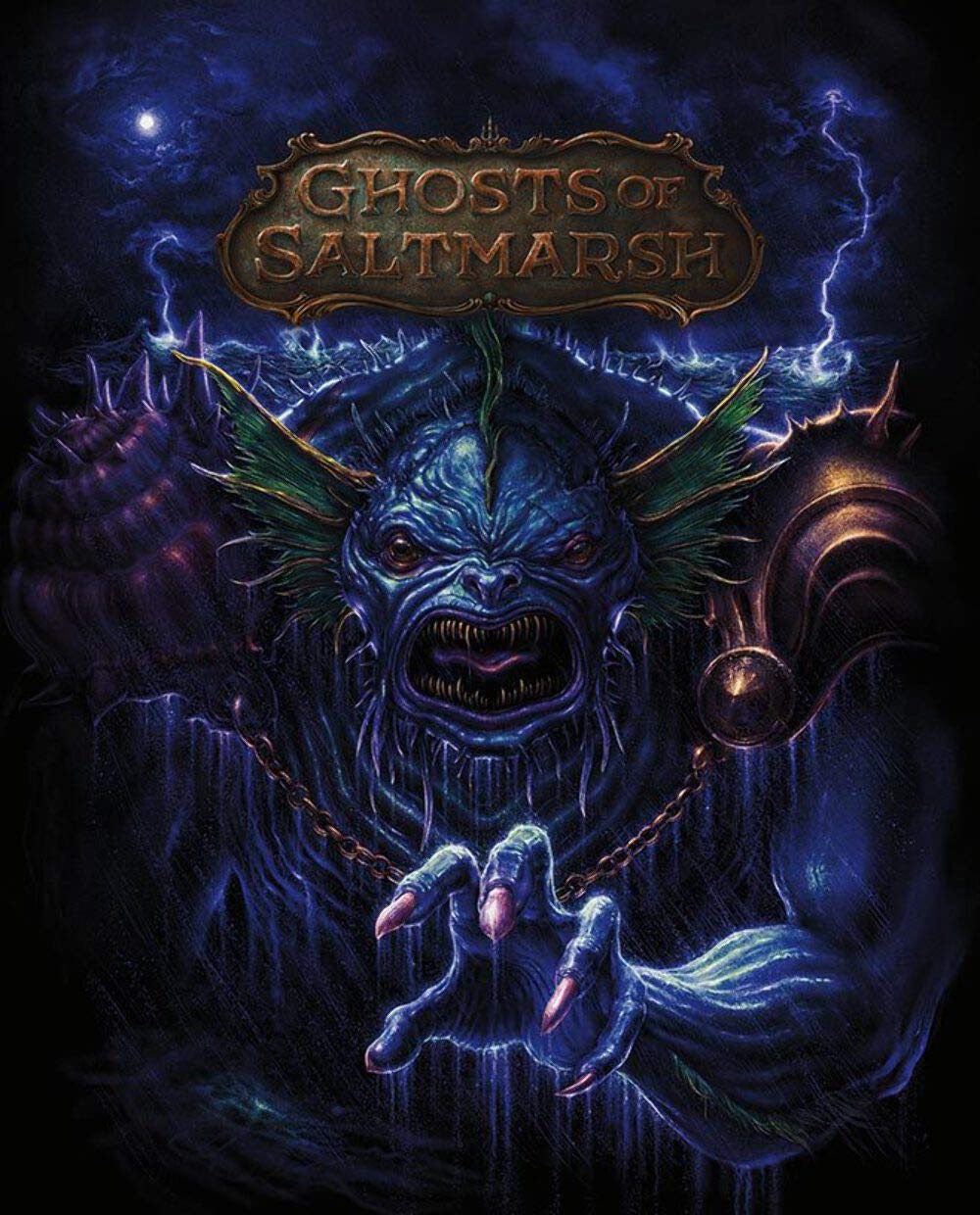
Ghosts of Saltmarsh is a nautical-themed Dungeons & Dragons adventure book for levels 1–12. It’s a mix of updated classic adventures and new content, focused on coastal exploration, ship combat, and political intrigue.
Verdict: Buy Ghosts of Saltmarsh if your group wants a mix of pirate adventures, haunted houses, and political scheming—and you’re willing to learn ship combat rules.
Ghosts of Saltmarsh is a nautical-themed Dungeons & Dragons adventure book for levels 1–12. It’s a mix of updated classic adventures and new content, focused on coastal exploration, ship combat, and political intrigue. Good for groups who like structured missions with room for open-world play, but requires more prep than a straightforward dungeon crawl.
Verdict: Buy Ghosts of Saltmarsh if your group wants a mix of pirate adventures, haunted houses, and political scheming—and you’re willing to learn ship combat rules.
At a Glance
| System | Dungeons & Dragons 5e |
| Best for | Groups who enjoy variety and problem-solving |
| GM required | Yes |
| Player count | 4–6 players |
| Session count | 20–30 sessions |
| Tone | Exploration, intrigue, horror |
The One-Sentence Verdict
Buy Ghosts of Saltmarsh if your group wants a mix of pirate adventures, haunted houses, and political scheming—and you’re willing to learn ship combat rules.
Skip it if you want pure dungeon crawling, dislike tracking multiple factions, or don’t want to deal with the extra complexity of naval battles.
Who This Adventure Is For
Groups who like variety. Ghosts of Saltmarsh isn’t one long story—it’s seven loosely connected adventures (plus side quests) that can be run as stand-alone missions or stitched into a campaign. One session might be a haunted house investigation, the next a naval battle against smugglers, and the next negotiating with lizardfolk. If your group enjoys switching genres, this works well.
DMs who don’t mind improvising. The book provides locations, NPCs, and key events, but it doesn’t handhold. For example, the town of Saltmarsh has factions with competing goals, but the DM needs to decide how those conflicts play out. If you like fleshing out details or reacting to player choices, you’ll have fun. If you prefer a scripted story, this will feel incomplete.
Players who enjoy problem-solving over brute force. Many encounters reward creativity—sneaking into a smuggler’s cove, bluffing your way past guards, or sabotaging a ship before combat starts. Straightforward “kill everything” approaches often backfire. The haunted house (a fan-favorite section) is deadly if rushed but manageable if players investigate carefully.
Fans of classic D&D with modern polish. Three of the adventures are updates of 1980s modules, but with clearer formatting and better balance. If you like the idea of old-school exploration (secret doors, traps, cryptic clues) without punishing difficulty, this strikes a good balance.
Who Should Skip It
New DMs who want a fully guided experience. Unlike starter adventures (e.g., Lost Mine of Phandelver), Ghosts of Saltmarsh assumes you can connect the dots between chapters. The DM must flesh out NPC motivations, decide how factions react to the players, and adjust encounters if the group goes off-script. If you’re still learning the rules, this adds stress.
Groups who hate ship rules. Naval combat uses special mechanics (ship stat blocks, crew actions, firing arcs) that some find clunky. You can handwave it, but that cuts out a big chunk of the book. If your group groans at the idea of tracking wind direction or cannon reload times, pick a land-based adventure instead.
Players who want clear heroes or villains. Many conflicts are morally gray—smugglers might be criminals, but they’re also protecting the town from worse threats. The book expects players to engage with politics, not just fight monsters. If your group prefers unambiguous “good vs. evil” stories, this might frustrate them.
Anyone expecting a pirate sandbox. Despite the nautical theme, this isn’t Assassin’s Creed: Black Flag. The book includes ship rules and sea encounters, but most adventures happen on land or in coastal dungeons. For a true open-world pirate campaign, you’d need to heavily modify it or pair it with other supplements.
How Long Does Ghosts of Saltmarsh Take?
20–30 sessions (50–75 hours) if you run all seven main adventures and some side content. Each chapter takes 2–4 sessions, depending on your group’s pace. The haunted house (Chapter 1) can be finished in one long session if players move fast, while the final dungeon (Chapter 7) might take 4–5 sessions due to its size and complexity.
Shorter runs work too. Since the adventures are loosely connected, you can easily skip or rearrange chapters. For example:
- Run just the haunted house and smugglers’ cave (Chapters 1–2) as a 3-session mini-campaign.
- Use the ship rules and random encounters for a custom pirate campaign, ignoring the book’s plot.
- Drop the Saltmarsh town politics and focus on the dungeons for a more classic feel.
Pacing depends on your group’s style. Investigative groups will spend extra time interrogating NPCs or researching lore, while combat-heavy groups might blast through dungeons faster. The book includes random encounters and side quests to pad runtime, but some feel tacked on—don’t be afraid to cut fluff.
Higher-level chapters need tweaking. The last few adventures (levels 9–12) are less polished than the early ones. The DM might need to adjust encounters or add connective tissue to make the story flow. Expect to spend extra prep time near the end.
What to Buy
Required:
- Ghosts of Saltmarsh ($30–$50). The core book has all adventures, ship rules, and monster stats.
Recommended:
- D&D Starter Set or Player’s Handbook. Ghosts of Saltmarsh doesn’t include core rules. New groups will need at least basic combat and character-creation guides.
- Battle maps or grid paper. Many encounters assume tactical combat (e.g., ship deck layouts, dungeon rooms). A wet-erase mat helps.
- Miniatures or tokens. Ship battles are easier to track with visual aids for ships, crew, and hazards.
Optional:
- Tales from the Yawning Portal. Another book of classic adventures—great for inserting extra dungeons if your group wants more combat.
- Dungeon Master’s Screen. Quick reference for ship rules and common NPC names.
- Third-party ship supplements. Books like Naval Code add depth if your group loves nautical play.
Play This Next
For more nautical adventures:
- Call from the Deep (DMs Guild) is a full pirate campaign with clearer story hooks.
- Isle of Dread (old-school) offers tropical exploration with dinosaurs and lost temples.
For classic D&D feel:
- Tales from the Yawning Portal has standalone dungeons with less story overhead.
- Curse of Strahd blends investigation and horror, but with tighter pacing.
For political intrigue:
- Dragon Heist focuses on urban factions and heists, minus the ship rules.
- Kingmaker (Pathfinder) offers kingdom-building with similar sandbox freedom.
For new DMs:
- Lost Mine of Phandelver (Starter Set) is more beginner-friendly but lacks Saltmarsh’s variety.
- Dragon of Icespire Peak has simpler quests and clearer DM guidance.
Frequently Asked Questions
Q: Can Ghosts of Saltmarsh be played by beginners?
The adventure can be challenging for new DMs due to its open-ended structure, but experienced players familiar with D&D 5e should be fine. New DMs may need extra prep time.