Candlekeep Mysteries
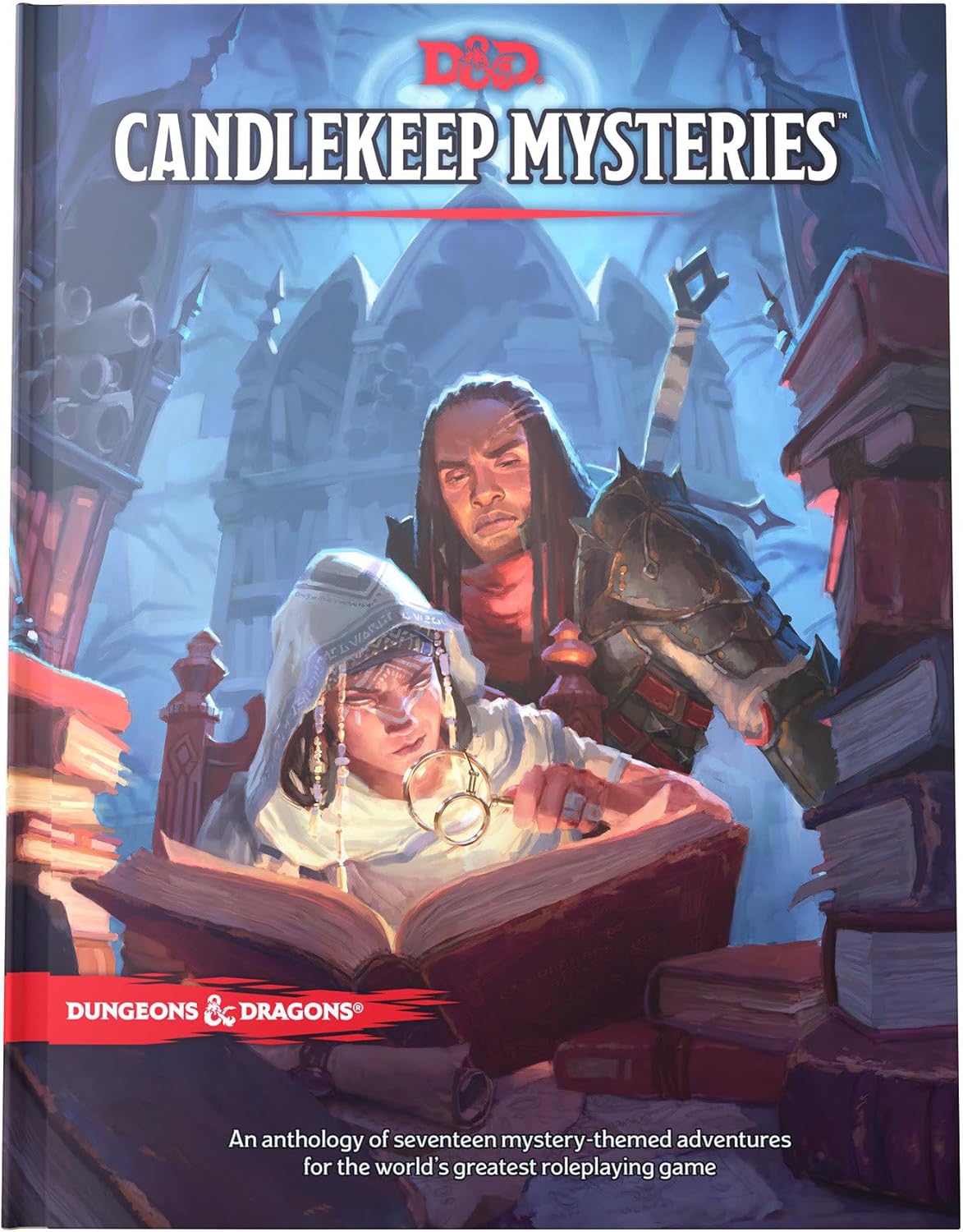
Candlekeep Mysteries is a collection of 17 short Dungeons & Dragons adventures set in the famous library of Candlekeep. Each mystery is standalone, making it easy to drop into any campaign or run as one-shots. But its structure—and some of its challenges—won’t suit every group.
Verdict: Play Candlekeep Mysteries if your group enjoys roleplay, exploration, and creative problem-solving — skip it if your group prefers straightforward combat or struggles with open-ended puzzles.
Candlekeep Mysteries is a collection of 17 short Dungeons & Dragons adventures set in the famous library of Candlekeep. Each mystery is standalone, making it easy to drop into any campaign or run as one-shots. But its structure—and some of its challenges—won’t suit every group. Here’s what you need to know before buying.
Verdict: Play Candlekeep Mysteries if your group enjoys roleplay, exploration, and creative problem-solving — skip it if your group prefers straightforward combat or struggles with open-ended puzzles.
At a Glance
| System | Dungeons & Dragons 5th Edition |
| Best for | Groups who enjoy roleplay, exploration, and creative problem-solving |
| GM required | Yes |
| Player count | 3–6 players |
| Session count | 2–4 hours per mystery (17 total) |
| Tone | Mystery, intrigue, and light horror |
The One-Sentence Verdict
Buy this if you want flexible, lore-rich mysteries that reward creative problem-solving—but skip it if your group prefers straightforward combat or struggles with open-ended puzzles.
Who This Adventure Is For
New DMs who want training wheels. Each mystery is self-contained, with clear hooks, NPC motivations, and multiple solutions. You won’t need to juggle a sprawling plot—just prep one 2–4 hour session at a time. For example, The Book of the Raven starts with players finding a map in a book, leading to a haunted house. The book gives you three ways the story might unfold, so you’re not stuck if players go off-script.
Groups that love RP and exploration. Over half the puzzles rely on talking to NPCs, deciphering clues, or investigating environments. In Shemshime’s Bedtime Rhyme, the party must stop a cursed nursery rhyme from driving the library mad—but violence won’t solve it. Instead, they’ll interview scholars, piece together lore, and maybe even perform the rhyme themselves to break the curse.
DMs who like to customize. The book encourages adding or cutting content to fit your table. The Canopic Being involves a mummy’s missing organs, but you could replace the mummy with a vampire if your players prefer gothic horror. The book’s format makes these swaps easy without breaking the story.
Who Should Skip It
Groups that hate puzzles. Some mysteries, like The Scrivener’s Tale, require players to interpret abstract clues (e.g., a riddle about “the word that ends all”). If your table freezes when faced with riddles or prefers to roll dice instead of debate solutions, at least 5 of the 17 adventures will frustrate them.
DMs who need strict structure. While the book provides multiple outcomes, it doesn’t handhold you through every possibility. In Kandlekeep Dekonstruktion, players investigate a cult’s rocket launch—but if they decide to join the cult instead of stopping them, the book shrugs: “Up to you!” New DMs who panic when players go rogue might feel abandoned.
Low-level parties (with exceptions). 12 of the 17 adventures are for levels 1–4, but some swing wildly in difficulty. The Curious Tale of Wisteria Vale (level 8) pits players against a bard who warps reality—fun for veterans, but a guaranteed TPK for beginners who miss subtle clues.
How Long Does Candlekeep Mysteries Take?
Each mystery runs 2–4 hours, but pacing depends heavily on your group. Investigations like Mazfroth’s Mighty Digressions (tracking down a stolen book) can wrap up in 90 minutes if players focus. But if they interrogate every NPC or fixate on red herrings (e.g., obsessing over a librarian’s unrelated secret romance), expect 5+ hours.
For a full campaign, stringing all 17 together would take ~50 sessions. However, the book doesn’t provide a overarching plot to connect them. You’d need to invent a reason why the party keeps returning to Candlekeep (e.g., they’re hired as freelance problem-solvers).
Best used as filler. Most DMs slot in 1–2 mysteries between major arcs. For example, run The Joy of Extradimensional Spaces (a wizard’s mansion inside a book) when your party needs a break from saving the world.
What to Buy
Just the book. No supplements or maps are needed—each adventure includes battle maps, and the puzzles rely on theater of the mind. The official hardcover has gorgeous art and durable pages, but the PDF works fine if you’re on a budget.
Optional: A Candlekeep lore primer. The book explains the library’s basics, but groups invested in Forgotten Realms lore might enjoy The Grand History of the Realms for deeper context (though this is far from essential).
Play This Next
If they loved the mysteries: Try Journeys Through the Radiant Citadel—another anthology of short adventures, but with more cultural diversity and less reliance on puzzles.
If they wanted more combat: Tales from the Yawning Portal offers deadly dungeons like The Sunless Citadel, where 80% of playtime is fighting or sneaking.
If they hated the structure: Dragon of Icespire Peak is a linear, combat-heavy starter adventure with zero riddles and clear quest markers.
Frequently Asked Questions
Q: Can I run these mysteries for new players?
Yes! Most adventures are designed for low-level characters (levels 1–4), making them beginner-friendly. Just avoid the higher-level mysteries like The Curious Tale of Wisteria Vale until your group gains experience.
Q: Do I need to know Forgotten Realms lore to run this?
No. Each adventure provides enough context about Candlekeep and its setting for first-time DMs. However, lore enthusiasts may enjoy digging deeper into the Forgotten Realms for added immersion.
Q: Can I modify these mysteries to fit my campaign?
Absolutely! The book encourages customization, so feel free to tweak monsters, NPCs, or plot hooks to better align with your campaign’s tone or player preferences.